AUPHA: What is your educational background and why did you choose the area(s) of study that you did?
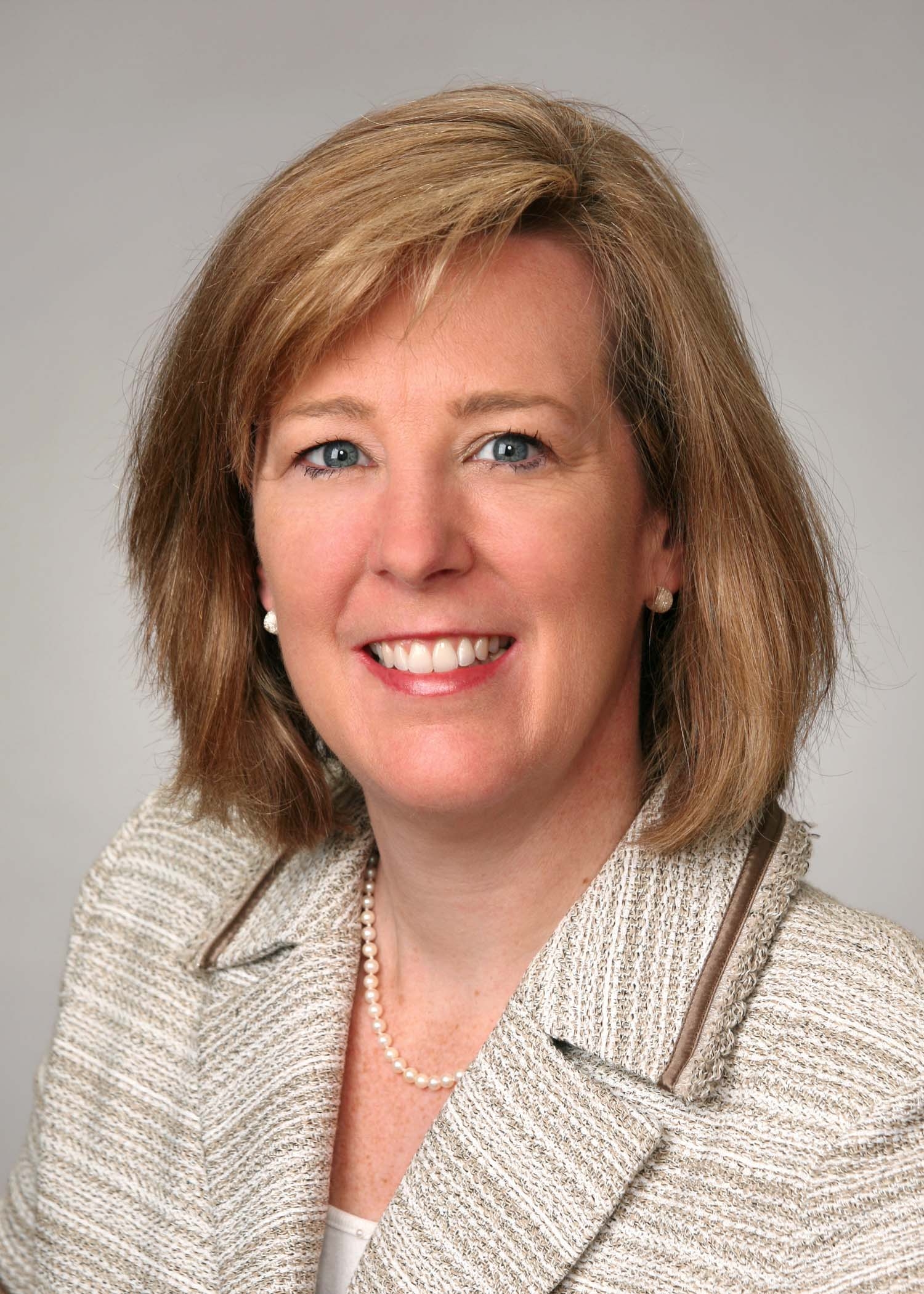 Lawler: My undergraduate degree is from the University of Illinois at Champaign-Urbana in accounting. I also have passed the CPA exam. I’ve always been good in math, and enjoyed my high school accounting class, which is why I studied accounting. My MBA is from Northwestern University, with a specialization in healthcare, marketing and finance. After working in public accounting after college, I realized that I would need an MBA to further my education and allow me to move beyond accounting. My PhD is from Benedictine University in Organizational Development, and I enrolled after working over 20 years in industry. Organizational Development rounded out my educational background with “soft skills” which are really hard to achieve in the work place. My dissertation explored how coaches help their clients achieve sustained change.
AUPHA: Tell us about the jobs you held before you got into academe
Lawler: In 1987, I started my career at Arthur Andersen as a staff auditor. I subsequently held positions in accounting, finance, and business development at Baxter and Caremark. My consulting roles were in KPMG’s national healthcare strategy practice and with the Commercial Club of Chicago’s Civic Committee. In 2000, I moved into education administration at Lake Forest Graduate School of Management, where I was the Associate Dean of the Chicago Campus. After I started my PhD in 2008, I moved into a business development role in Lake Forest Corporate Education. I joined Rush University in 2009 as the Associate Program Director and moved into the Acting Program Director role in 2011.
AUPHA: Where have you held faculty appointments during your career?
Lawler: Lake Forest Graduate School of Management, Keller Graduate School of Management, and Rush University
AUPHA: What is your current position and what made you choose the program you are currently appointed to?
Lawler: I am currently the Acting Program Director at Rush University. I chose Rush University for several reasons. First, since I was working on my PhD, I was looking for an opportunity to work in a premiere research and educational institution such as Rush. Second, I felt that my prior experiences in healthcare management, education administration, and working with a practitioner-teacher faculty would be beneficial in my new role. I had successfully built a healthcare MBA specialization at Lake Forest Graduate School of Management so I knew about CAHME, AUPHA, and the healthcare industry. Finally, I had known Rush Professor Andy Garman for many years prior to my appointment. Andy invited me to speak at the annual faculty retreat in 2008, where I learned about the HSM program and met the dedicated faculty. As I learned about Rush’s HSM program, I was immediately impressed with their unique practitioner-teacher model, first year internship program, and small class sizes.

AUPHA: Tell us what's unique about your program, faculty, and students.
Lawler: There are several aspects that are unique. Rush has a practitioner-teacher faculty model; most of the faculty are practitioners who are sharing their lessons learned and real world experiences in the classroom. Students are guaranteed a part-time internship at Rush University Medical Center during their first year, as part of their admission into the program. This is an invaluable experience for the students, particularly for students who are working professionally for the first time. Students have a faculty preceptor who mentors them throughout their internship. Students are also assigned a faculty academic advisor and a faculty career advisor. Rush only accepts between 20-24 students each year. The small class size enhances the student learning experience.
AUPHA: What's the greatest challenge you face in your role at your current program?
Lawler: My greatest challenge is juggling everything that needs to get accomplished to ensure program excellence. I lead multiple committees including curriculum, marketing, faculty affairs, and development, and faculty appointments and promotions. I also manage the office staff, oversee the internship program, manage new student on boarding and orientation, and teach. My team oversees various events and activities including graduation, orientation, open houses, campus visits, internship matching, career advisor/advisee luncheon, Masters Project presentations, and our annual alumni event. This year I am also leading the CAHME self study activities.
AUPHA: What do you consider your greatest accomplishment during your tenure at your current program?
Lawler: I used my prior experience and added additional structure into the HSM department. I meticulously rewrote job descriptions and matched actual day-to-day responsibilities of each team member to their job descriptions. I hired a program coordinator. My team is tasked with many duties and challenges to ensure program excellence and I’m proud of our successes. Other enhancements include an extensive operations calendar, a streamlined on boarding process and orientation for incoming students, and a focus on assessment of student learning.
AUPHA: What keeps you in this field, despite the challenges mentioned above?
Lawler: I find Rush University Medical Center a fascinating place to work. There are so many impressive employees who are dedicated to the institutional mission. Rush’s culture is experienced through its I-CARE values: Innovation, Collaboration, Accountability, Respect, and Excellence. I learn something new each week. There are plenty of opportunities to mentor and to be mentored. As a new PhD, I cannot think of a better place to be working.
The HSM program is transformational. I am amazed at how the students change from new student orientation to graduation. Their improved competencies, confidence, and knowledge of the healthcare industry are a testament to the teaching and mentoring of my fellow HSM faculty colleagues and the HSM program. Helping young leaders prepare for their future in healthcare keeps me in this field.
AUPHA: If making a living/money were not a consideration, what would you be doing instead or what would you do in retirement?
Lawler: If I were not at Rush, I would be coaching – either executive or life coaching. I have enjoyed coaching faculty and students over the years and would like to help others as I have been helped. I plan to publish my coaching dissertation and continue my research in coaching. I’m also a world traveler. I plan to continue to explore this wonderful world.