AUPHA: What's your educational background and why did you choose the area(s) of study that you did?
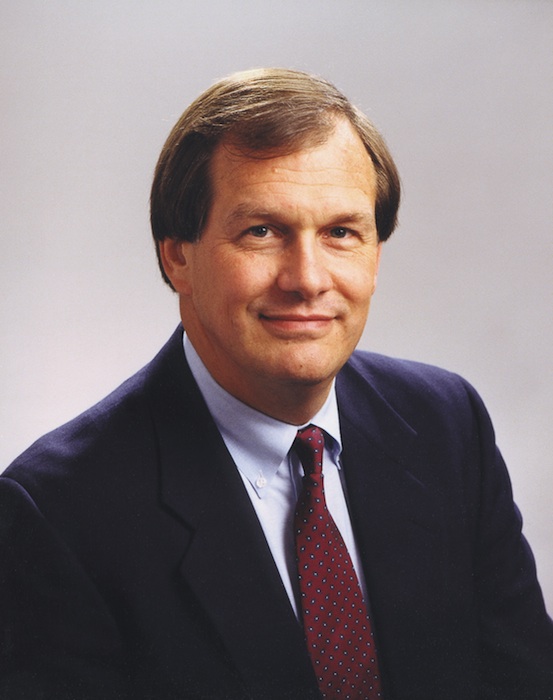 Hollis: My undergraduate degree was in international affairs—with a focus on Africa. I was an exchange student at the Université de Dakar in Senegal (West Africa) where all my courses were in French, and I also learned the local language Wolof. While I had been interested in the health sector since heading the health focused Explorer Post in high school, the African experience helped me learn about ways of potentially combining interests in health, management, and planning for practical ideas to make a difference either domestically or internationally.
Like many who discover healthcare management, I was introduced to the field by people I met, including a person who worked in Africa on projects developing hospitals and clinics—it was he who suggested combining my interests and pursuing both masters’ degrees in healthcare management and architecture/planning.
I decided on Cornell both because of its long tradition of allowing students to set up interdisciplinary programs—and because of its enthusiastic heads of Architecture and the Sloan Program who saw this as an innovative and valuable combination. I was accepted to do both a March and an MBA with the Sloan Certificate in Hospital and Health Services Administration. I had started the architecture degree but ran out of funds, and decided to complete the MBA and Sloan Program, start work, and return to school later. This “later” ended up happening over about 10 years. I took courses while working at the University of Cincinnati Medical Center and ultimately finished an architectural degree at Washington University in St Louis.
I was always interested in combining academic fields where I could be help bridge disciplines to make a contribution. The training has allowed me to do interesting work and also to teach applied courses and provide practical advice for students.
Like others in the field, my healthcare management training has served me well.
AUPHA: Tell us about the jobs you held before you got into academe
Hollis: Perhaps my most unusual job was acting as an agent and negotiating with various groups to obtain court documents and publications for Yale Law School while in Senegal. Before returning to school I worked in a community hospital and with a planning agency. I did my residency in a recently merged 1000 bed 3-hospital system in Massachusetts.
After graduation, I went to the University of Cincinnati Medical Center—there I was able to combine training and experience in planning and management. I started on the planning staff, was promoted to director of planning and ultimately became a hospital executive leadership team member. I was very active in local organizations and was elected president of the Greater Cincinnati Alliance for Hospital Planning.
In the early 1980’s, the opportunity to join an entrepreneurial firm developing outpatient dialysis clinics opened up. I was able to apply both my experience in regulatory work on CON applications, my planning/design expertise in planning new facilities, and my management training in hiring, operating and growing the programs. We ultimately had a fairly large operation with clinics in three states, a DME company and contract service operations for hospital clients in these states. I became an equity partner and ultimately ran the entire operation.
Along the way, I became president of the local Council on Renal Management and of the national association representing dialysis facilities. In this role I worked with a coalition on advocacy of policy issues both locally and in Washington DC.
After two of the partners had financial problems, I ended up learning about mergers/acquisitions, by leading the sale of the operations.
After working with a consulting firm on a variety of projects including managing a research study for a social venture fund, I joined a mergers/acquisitions advisory firm—ultimately becoming a named partner. I managed multi-million dollar client transactions in 20 states with private equity funds and both international and domestic acquirers.
In 2003 while serving as president of our alumni association, I was offered the chance to return to Cornell to teach and work with alumni. I ultimately bought out my interest in the firm and re-established my own advisory group—through which I continue to handle clients while serving as the Sloan Program’s executive director.
AUPHA: Where have you held faculty appointments during your career?
Hollis: My first teaching experience was at the University of Cincinnati in its health planning and administration program. A supportive colleague on the regular faculty was Mary Stefl, who now runs the program at Trinity University. In addition to teaching introductory courses on health management, it was here that I first developed a well received course on health facility planning for managers.
I also held an adjunct teaching appointment at Xavier University’s program working with the late Ed Arlinghaus. Over the years I was also a guest lecturer at a number of other programs including Cornell and St Louis University.
However, most of my work has been in the professional field, which is what I try to draw on in my work with students, as an advisor and as a faculty member.
AUPHA: What is your current position and what made you choose the program you are currently appointed to?
Hollis: My current position is executive director with a faculty appointment as lecturer. I had been a very involved volunteer for over 15 years before returning in my current role. As president of the Sloan Alumni Association, and as a member of the Dean’s advisory group for the College, I was back on campus generally at least 3-4 times a year. I had also been a part of the search committee for fellow leadership team member professor Will White.
Having been deeply committed to the program as a volunteer for so many years, when the opportunity opened up to make a difference directly, I was very interested.
Initially, I thought it would be impossible due to my shareholder agreement and the demands of my clients and business. However, I was able to negotiate a part-time arrangement with my partner that allowed me to commute to Ithaca from Hartford on a regular basis. Later, when Cornell offered to extend my contract, after a great deal of soul searching, and a protracted negotiation to buy-out my portion of the business, I decided to relocate to Ithaca. It has been a great decision, as working with the Sloan Program students, faculty and other colleagues at Cornell has been extremely rewarding.
AUPHA: Tell us what's unique about your program, faculty, students
Hollis: I have always felt we had an unusually strong bond among our students, our faculty and our dedicated Sloan Alumni Association. We often refer to this as our “Sloan family”. We are blessed with highly talented and passionate faculty and students. Cornell’s motto “any person-any study” is reflected in the incredible diversity of courses, people and fields that students can tap into as complements to our program. We are also fortunate to have a large assortment of committed Executives-in-Residence and alumni/other practitioners who teach short courses on topics that complement the core curriculum—including a course with Quint Studer.
Our Dean also fully supports our reaching across academic units and disciplines internally and with the larger university. Sloan has much collaboration with the Johnson School, Hotel School, Dyson School, School of Industrial and Labor Relations, Law School, Medical School, Design & Environmental Analysis and others.
As just one example, with HCAHPS, patient/family-centered care and other trends, we believe our students can learn much from the hospitality industry. We have had jointly sponsored entrepreneurship programs with Hotel for a number of years. I have an appointment to teach a joint Hotel/Sloan Senior Living course at Hotel. The course is sponsored by a Hotel graduate who is president of Brookdale Senior Living (NYSE: BKD) and another graduate who heads Health Care REIT (NYSE: HCN). We also developed an affiliation between Henry Ford Health System, Hotel School, Center for Hospitality Research, Human Ecology and the Sloan Program of Health Administration to complement this effort.
We just held a “Roundtable on Hospitality and Healthcare”, a symposium that gathered leaders from hotel companies, senior living, medical travel, acute care, outsourced/training firms, wellness, home care etc. Many of the participants were graduates of hospitality programs at Cornell and elsewhere who had made the transition to healthcare. Just a few of the participants included former Ritz VP and CEO of Henry Ford West Bloomfield Hospital, the president of Hyatt’s senior living operation “Vi”, a Hotel graduate who is now the VP Operations of the Cleveland Clinic Canada, another Hotel grad who was an E&Y Entrepreneur of the Year in Canada and is co-founder of Nurse Next Door, the VP and head of the Ritz leadership center, hospitality and health investment bankers, and an ex-hotel executive who now runs Support Services at New York Presbyterian/Weill-Cornell.
There isn’t space to go into all of the activities just with Hotel, not to mention those with other schools/programs. This interdisciplinary collaboration is part of what makes my work so satisfying and helps give Sloan its unique flavor.
AUPHA: What's the greatest challenge you face in your role at your current program?
Hollis: Frankly, as with most of my colleagues at other programs, there aren’t enough hours in the day to pursue all of the initiatives we would like. I have a strong commitment to working with our 4 Executives-in-Residence to help guide and mentor our students as they seek internships and jobs, and have been very pleased with the excellent results. However, the time constraints are sometimes frustrating.
AUPHA: What do you consider your greatest accomplishment during your tenure at your current program?
Hollis: I am proud of the continued improvement in the quality of the Program, our students and their unbroken string of 100% placements in excellent organizations. This has certainly been helped by our success in drawing students from a diverse pool of outstanding schools, including some incredibly talented individuals who are already making significant contributions as young careerists.
It was very gratifying to see our feelings about this improvement validated through the opinions of our peers via the substantial improvement in our recent rankings. Just as importantly, it has been rewarding to develop so many wonderful collegial relationships both inside the university and with many colleagues at AUPHA and its member programs.
AUPHA: What keeps you in this field, despite the challenges you mentioned above?
Hollis: I guess it is the combination of a passion for making a difference and for getting the word out about our wonderful field. Healthcare management is still a relatively “under the radar” field, and while I feel good that the AUPHA committee I chaired with a great group of colleagues developed some good materials to expose students to the field—we still have a long way to go.
I have worked with a number of other AUPHA colleagues exhibiting, speaking, and reaching out to groups like the National Association of Advisors for the Health Professions (NAAHP), and the AMA to try to get healthcare management in their health career guide. I continue to seek out both individuals and groups to get the word out. I am always talking to students about the field, and telling them that no matter what program they choose, it is a wonderful profession where you can truly “do well by doing good”.
AUPHA: If making a living/money were not a consideration, what would you be doing instead or what would you do in retirement?
Hollis: The work I do is incredibly rewarding—it is really a labor of love. However, some day I do hope to be able to do extensive sailboat cruising. As some of my AUPHA colleagues know, I am always on the lookout for an opportunity to go sailing, and some of the most memorable vacations have been chartering sailboats. I also love taking students out on Cayuga Lake and have included a picture of a sail on my Catalina 30 with a group of students that they included on the Sloan Student Association calendar. However, there are never enough hours in the day—so in retirement I do look forward to more leisurely sails in the tropics, and exploring places like the San Juan Islands, Maine coast, Chesapeake Bay, and islands of Greece and Turkey – some of the sailing destinations on the “bucket list”.
I also enjoy professional services business M&A transactions. I refer to the work as being a “corporate marriage counselor”—because it is all about trying to make sure that the cultural fit will work. Unlike manufacturing and real estate intensive M&A, it is all about people. Quite the opposite of corporate raiders who may lay off thousands of people to pay for the deal—the people are the business—so there are rarely layoffs. Rather, if we do things right, the people will stay and often have more opportunities with a new organization with more extensive resources than they might have had with a smaller/less well capitalized organization. I currently work with selected clients—and expect to continue to work in this area when I retire from my work at Cornell.
I also still harbor an interest in working internationally, and am also considering working on some international development projects or doing a future stint with the UN Volunteer program.